ARE LIFEPO4 BATTERIES GOOD FOR SOLAR?In the quest for more efficient, durable, and environmentally friendly energy storage systems, LiFePO4 batteries (lithium iron phosphate batteries) have emerged as a popular choice, especially in solar energy applications. This detailed exploration will assess whether LiFePO4 batteries are indeed the optimal solution for solar setups, tapping into aspects such as battery lifespan, charging protocols, and overall efficiency within renewable energy frameworks.
“Unlocking the perfect match for your solar system! Explore why LiFePO4 batteries might be the key to a powerful and long-lasting setup.”
What Are LiFePO4 Batteries?
LiFePO4 batteries are a type of lithium-ion battery that uses lithium iron phosphate as the cathode material. Compared to other lithium-ion batteries, LiFePO4 batteries offer several advantages, including improved safety, longer lifespan, and better thermal stability. These characteristics make them particularly suitable for applications where reliability and longevity are paramount, such as solar energy systems.
Benefits of LiFePO4 Batteries in Solar Applications
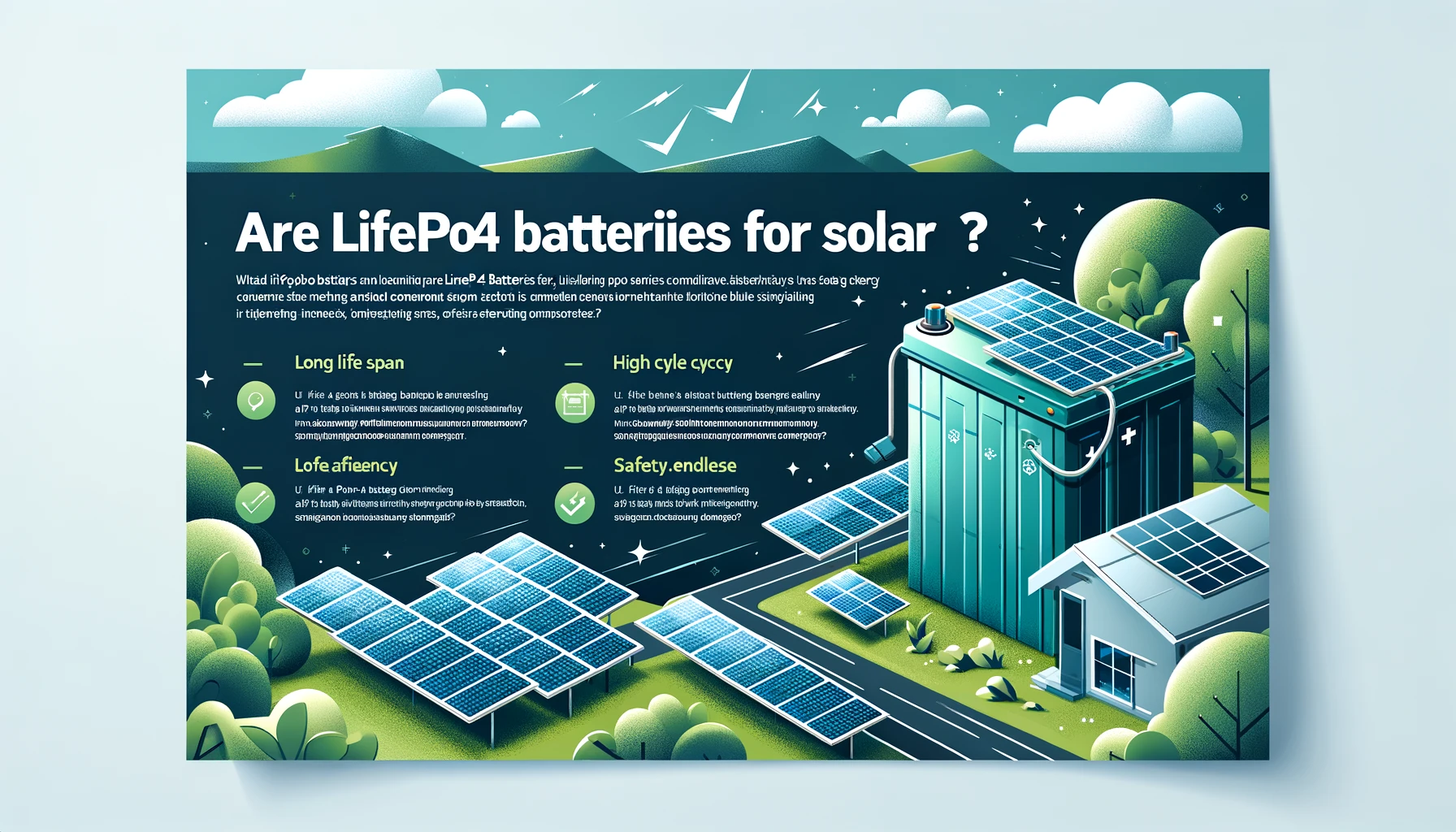
Longevity and Reliability: One of the standout features of LiFePO4 batteries is their lifespan. They can endure anywhere from 2,000 to 5,000 charge cycles before their capacity falls below 80% of their original state. This longevity is crucial for solar systems, where batteries are cycled daily.
Safety Features: Safety is paramount in energy storage, and LiFePO4 batteries excel here. Their chemical composition prevents them from catching fire or exploding, a risk that is significantly higher in other types of lithium batteries.
Efficiency: In solar applications, efficiency means how well a battery can convert and store the energy it receives. LiFePO4 batteries are known for minimal energy loss during both charging and discharging phases, making them highly efficient.
Environmental Impact: These batteries contain no heavy metals nor rare earth elements, making them a more environmentally friendly option compared to other batteries like lead-acid or even other lithium-based variants.
Scalability and Flexibility: The modular nature of LiFePO4 batteries allows for scalability in solar applications. Whether for residential, commercial, or industrial use, these batteries can be scaled to meet different energy needs and configurations, including 12-volt LiFePO4 battery setups.
Considerations When Using LiFePO4 Batteries for Solar
While LiFePO4 batteries offer numerous advantages, there are also some considerations to keep in mind when integrating them into a solar energy system.
Initial Cost
LiFePO4 batteries have a higher upfront cost compared to lead-acid batteries. However, this cost is often offset by their longer lifespan, lower maintenance requirements, and higher efficiency. When evaluating the total cost of ownership over the lifespan of the battery, LiFePO4 batteries often prove to be more economical.
Temperature Sensitivity
Although LiFePO4 batteries are more stable than other lithium-ion batteries, they can still be sensitive to extreme temperatures. It is essential to ensure that the batteries are installed in an environment where temperature fluctuations are minimal. Some LiFePO4 batteries come with built-in temperature management systems to mitigate this issue.
Charging Requirements
LiFePO4 batteries require specific charging parameters to ensure optimal performance and longevity. Using a charger that is not designed for LiFePO4 batteries can result in reduced efficiency and lifespan. Therefore, it is crucial to use a compatible charge controller and inverter that can handle the charging and discharging characteristics of LiFePO4 batteries.
Compatibility with Existing Systems
When upgrading an existing solar energy system to LiFePO4 batteries, it is essential to ensure compatibility with the existing charge controllers and inverters. Some older systems may not be compatible with the charging requirements of LiFePO4 batteries and may need to be upgraded.
Charging and Maintaining LiFePO4 Batteries
The proper charging protocols for LiFePO4 are simpler and quicker than many other battery technologies. LiFePO4 batteries can be charged with a standard lithium-ion charger, and do not require complex management systems. However, to maximize their efficacy and lifespan, maintaining a proper charging cycle and avoiding deep discharges is crucial.
Comparative Analysis: LiFePO4 vs. Other Solar Batteries
When comparing LiFePO4 to other solar batteries, several factors stand out:
Cost-Effectiveness: Initially, LiFePO4 batteries may have a higher upfront cost compared to options like lead-acid batteries. However, the longer lifecycle and lower maintenance costs can make them more cost-effective in the long run.
Performance: In terms of performance, particularly in fluctuating temperatures, LiFePO4 batteries maintain a consistent discharge rate and are less susceptible to degradation





Leave a Reply