

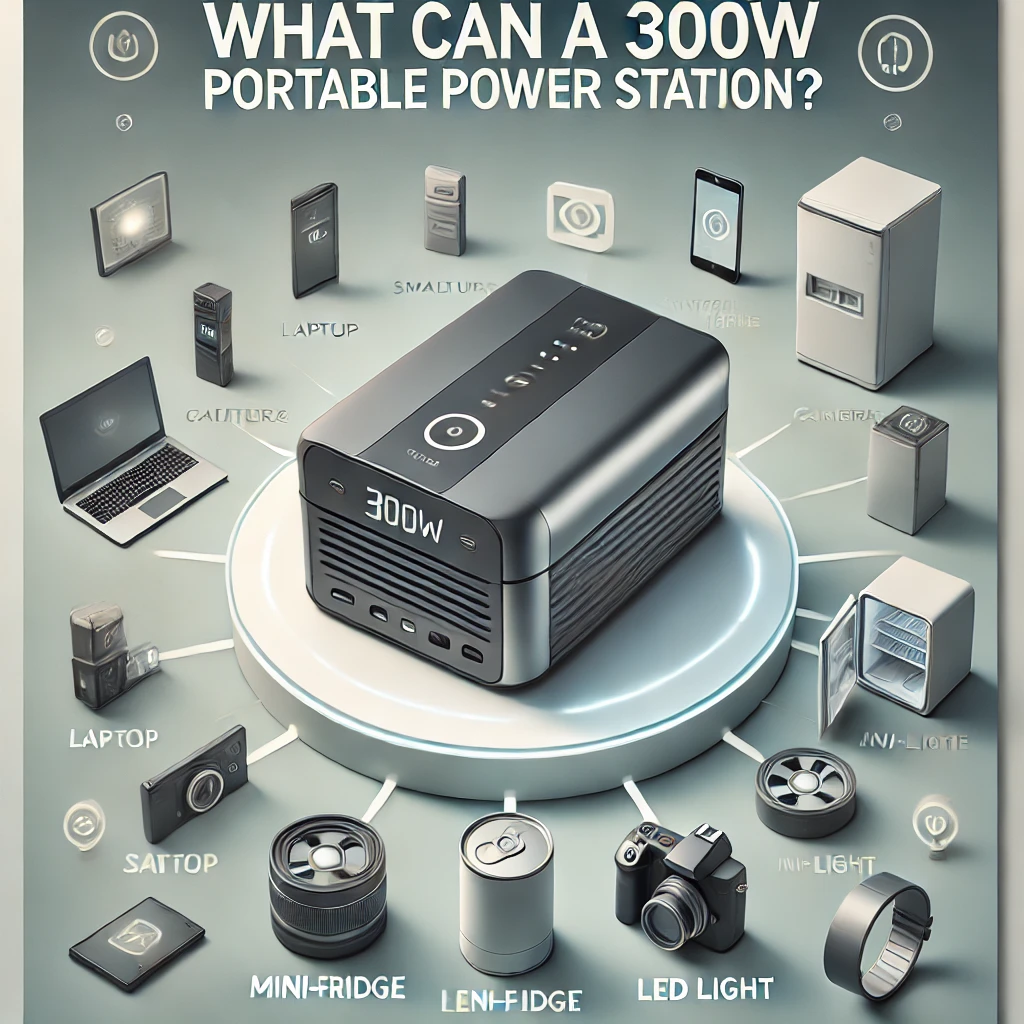
What Can a 300W Portable Power Station Run?
WHAT CAN A 300W PORTABLE POWER STATION RUN?
In an age where energy independence and versatility are increasingly valued, portable power stations have become essential tools for outdoor enthusiasts, emergency preparedness, and even everyday use at home. Among the various options available, a 300W portable power station offers a great balance of capacity and portability. This blog will explore what a 300W portable power station can run, its applications, benefits, and tips for maximizing its potential.
A 300W solar battery typically refers to its continuous power output capability, meaning it can sustain a load of up to 300 watts at any given moment. However, it’s essential to consider that the total watt-hours (Wh) rating is also crucial when determining how long you can run devices on the station. For instance, a unit with a capacity of 300Wh can theoretically power a 300W device for one hour, a 150W device for two hours, and so on.
Understanding Portable Power Stations
KEY FEATURES OF A 300W PORTABLE POWER STATION
- Capacity: Generally ranges from 250Wh to 600Wh.
- Outputs: Multiple AC outlets, USB ports (both USB-A and USB-C), and DC carports.
- Weight: Usually between 7 to 20 pounds, depending on the design and materials.
- Battery Type: Commonly Lithium-ion, which offers a good energy density, longevity, and safety.
- Recharge Options: Can be recharged via AC outlets, car chargers, or solar panels.
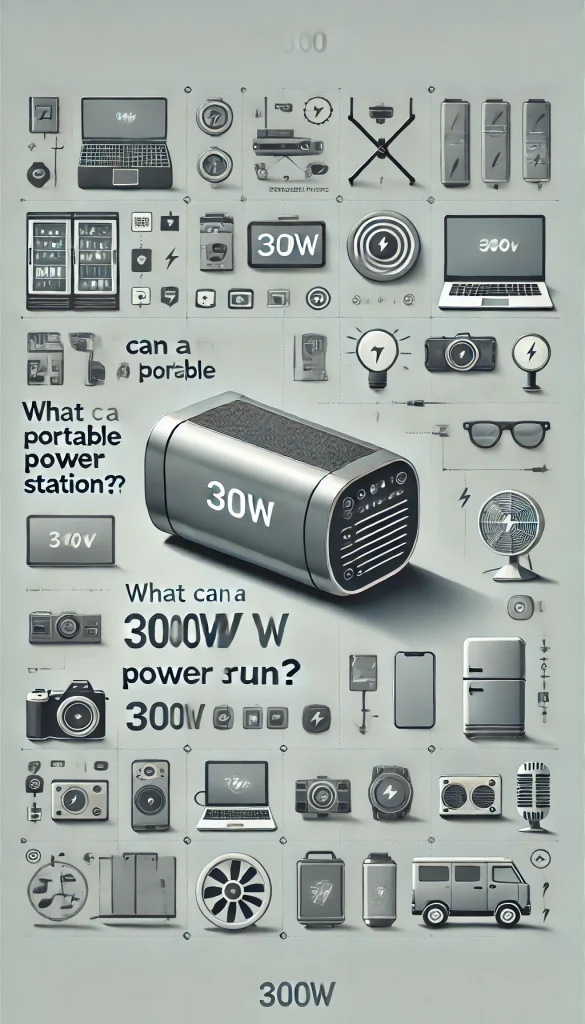

What Devices Can a 300W Portable Power Station Run?
Now that we have a foundational understanding of portable power stations, let’s explore the types of devices and appliances that a 300W power station can run.
1. Small Kitchen Appliances
Many people are surprised to find that a 300W portable power station can handle various small kitchen appliances, making it an excellent choice for camping or outdoor cooking.
- Coffee Maker: A typical drip coffee maker consumes around 600W, but single-serve coffee makers like the Keurig often use less than 300W, allowing you to brew coffee during a camping trip.
- Blender: Many standard blenders can operate under 300W, making it easy to whip up smoothies or soups.
- Electric Kettle: While most electric kettles may exceed 300W, some smaller or low-power models can work perfectly for boiling water.
2. Electronics and Gadgets
One of the most common uses for a portable power station is charging and running electronic devices.
- Laptops: Most laptops consume between 45-90W. A 300W power station can easily keep your laptop charged for several hours, making it ideal for remote work or studying outdoors.
- Smartphones and Tablets: Charging smartphones and tablets is very efficient, with power usage typically around 5-20W. You can charge multiple devices simultaneously.
- Cameras and Drones: Photographers and videographers can power their gear, ensuring they capture all the important moments without running out of battery.
3. Outdoor Gear
For outdoor enthusiasts, a 300W portable power station can be invaluable for powering various gear.
- Camping Lights: LED camping lights typically consume very little power (around 10-20W), allowing you to illuminate your campsite throughout the night.
- Fans: Battery-powered fans can keep you cool in hot weather, with most consuming under 50W.
- Portable Coolers: Some small electric coolers and mini-fridges fall within the 300W range, making it possible to keep food and drinks cold during outdoor adventures.
4. Medical Devices
In emergencies or while traveling, having a portable power station can be a lifesaver for those relying on medical equipment.
- CPAP Machines: Many Continuous Positive Airway Pressure (CPAP) machines operate under 100W, making it feasible to use one overnight on a 300W power station.
- Oxygen Concentrators: Some smaller models consume around 200-250W, allowing them to run for a limited time on a power station, depending on the capacity.
5. Emergency Preparedness
A portable power station can be a crucial asset during power outages or natural disasters.
- Lights and Chargers: Keep your essential devices charged and lights running during emergencies. A 300W power station can keep your phone charged for several days.
- Small Refrigerators: Some compact refrigerators can operate under 300W, providing critical food storage during a blackout.
6. Toys and Games
For families, a portable power station can make outdoor gatherings more enjoyable.
- Portable Gaming Consoles: Systems like the Nintendo Switch draw minimal power, making them easy to charge and play during outings.
- Inflatable Bounce Houses: Some smaller inflatable toys or bounce houses require under 300W for inflation, providing hours of fun for kids.
Factors That Affect Run Time
- Device Efficiency: Some devices may have varying power consumption rates based on settings or usage.
- Battery Health: Older batteries may have reduced capacity, affecting overall performance.
- Ambient Temperature: Extreme temperatures can affect battery efficiency, reducing the run time.
Factors That Affect Run Time
- Device Efficiency: Some devices may have varying power consumption rates based on settings or usage.
- Battery Health: Older batteries may have reduced capacity, affecting overall performance.
- Ambient Temperature: Extreme temperatures can affect battery efficiency, reducing the run time.
Tips for Maximizing Your 300W Portable Power Station
1. Know Your Devices
Always check the wattage of the devices you plan to run. Make a list of essential items and their power consumption to prioritize usage effectively.
2. Prioritize Charging
Charge high-power devices first, such as laptops or CPAP machines, and save lower-wattage devices like smartphones for later. This ensures critical devices are powered first.
3. Use Efficient Devices
Opt for energy-efficient devices that consume less power. LED lights, low-wattage chargers, and energy-efficient appliances can significantly extend the usable time of your power station.
4. Keep It Charged
Always start with a fully charged power station. When not in use, keep it plugged in and check periodically to ensure it’s ready when you need it.
5. Monitor Usage
Use a power monitoring device or app to keep track of how much energy your devices consume. This helps you manage usage more effectively.
6. Plan for Solar Recharging
Consider investing in solar panels compatible with your power station. This allows for renewable energy charging while you’re on the go, extending your runtime indefinitely under the right conditions.
7. Maintain the Power Station
Regularly check the battery condition, ensure the connections are clean, and follow manufacturer guidelines for optimal performance.
Conclusion
A 300W portable power station is an incredibly versatile tool capable of powering various devices, from small kitchen appliances and electronics to outdoor gear and emergency medical equipment. By understanding its capabilities and implementing strategies for efficient use, you can maximize its potential for camping trips, emergency situations, and everyday convenience.
Investing in a portable power station not only enhances your energy independence but also provides peace of mind knowing that you have a reliable power source at your disposal, whether you’re out in the wild or navigating unexpected power outages at home. With the right preparation, your 300W portable power station can keep your essential devices running and ensure you’re always powered up when you need it most.
Leave a Reply