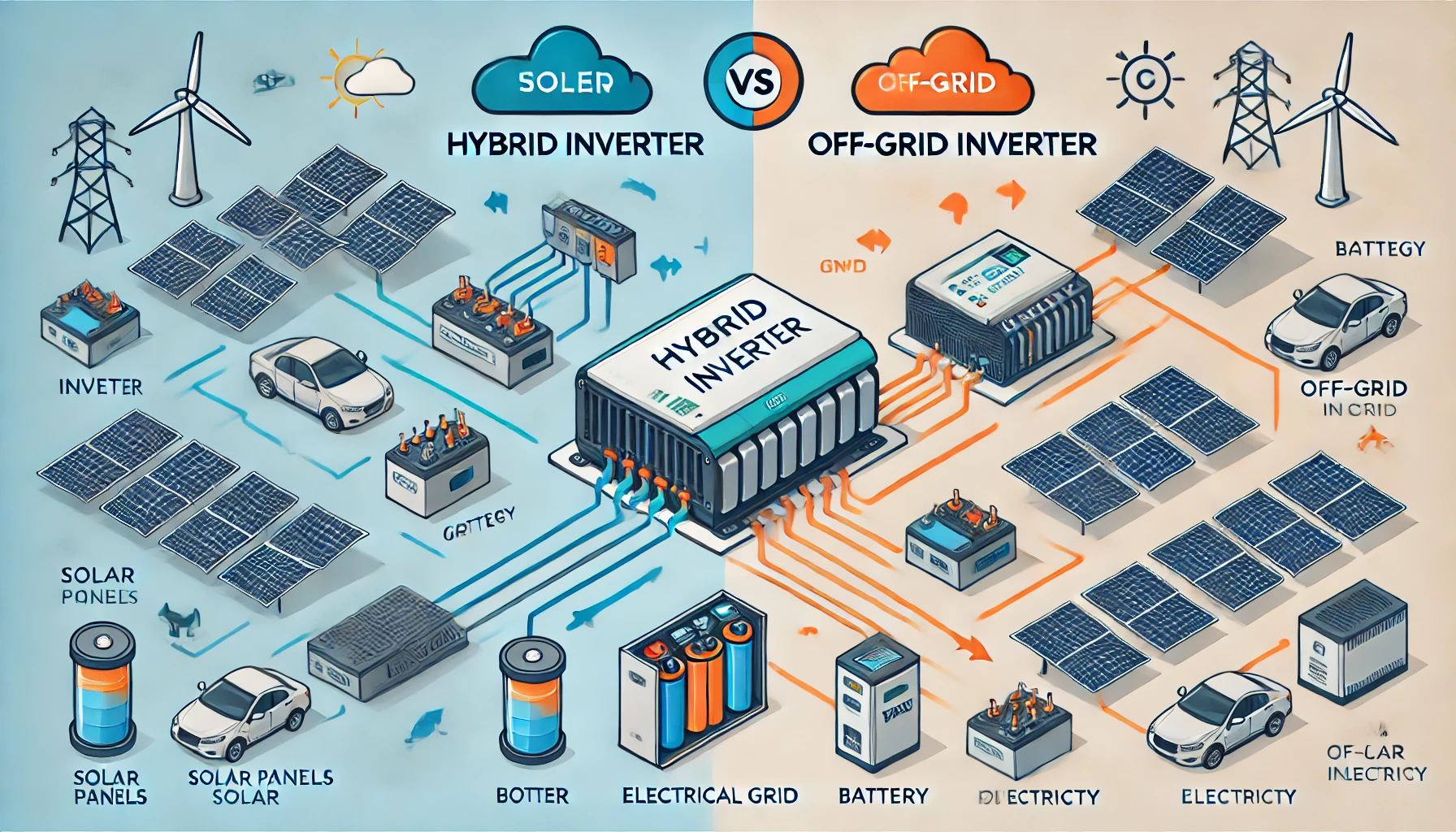
A hybrid inverter is a versatile component of a solar power system that combines the functionalities of both grid-tied and off-grid inverters. It can manage energy from solar panels, battery storage, and the grid simultaneously. This makes it an excellent choice for those looking to optimize their energy usage and ensure reliability.
- Energy Management: Hybrid inverters efficiently manage energy flow between solar panels, batteries, and the grid. They prioritize solar energy usage and can store excess energy in batteries for later use.
- Grid Interaction: These inverters can export surplus energy to the grid, allowing homeowners to benefit from net metering or feed-in tariffs.
- Backup Power: In the event of a power outage, hybrid inverters can switch to battery power, ensuring a continuous power supply.
- Cost Savings: By optimizing energy usage and reducing reliance on the grid, hybrid inverters can significantly lower electricity bills.
- Scalability: Hybrid systems can be easily expanded with additional solar panels or batteries, making them future-proof.
Off-Grid Inverter: Independence from the Grid
An off-grid inverter is designed for systems that operate independently of the electrical grid. These systems are typically used in remote locations where grid access is not available or for individuals seeking complete energy independence.
Benefits of Off-Grid Solar Inverter
- Complete Autonomy: Off-grid inverters allow for complete energy independence, making them ideal for remote locations.
- Reliability: These systems can be designed to ensure a continuous power supply, even in the absence of sunlight, by using battery storage.
- Self-Sufficiency: Off-grid systems promote self-sufficiency, reducing reliance on external energy sources and mitigating the impact of power outages.
- Environmental Impact: By utilizing renewable energy sources, off-grid systems can significantly reduce carbon footprints.
Multi-Mode Inverters: The Best of Both Worlds
Multi-mode inverters combine the functionalities of both hybrid and off-grid inverters. They can operate in grid-tied, off-grid, or hybrid modes, offering maximum flexibility and efficiency. These inverters are ideal for users who want the benefits of both systems.
Key Differences Between a Hybrid Inverter and an Off-Grid Inverter
Understanding the differences between a hybrid inverter and an off-grid inverter can help you choose the right system for your needs:
1.Grid Connection:
Hybrid Inverter: Connected to the grid, allowing for the export of excess energy and import of power when needed.
Off-Grid Inverter: Not connected to the grid, operating independently.
2.Energy Management:
Hybrid Inverter: Manages energy flow between solar panels, batteries, and the grid, optimizing usage.
Off-Grid Inverter: Manages energy flow between solar panels and batteries, focusing on self-sufficiency.
3.Backup Power:
Hybrid Inverter: Provides backup power during outages by switching to battery storage.
Off-Grid Inverter: Always operates on battery storage, ensuring a continuous power supply.
4.System Complexity:
Hybrid Inverter: More complex due to the need to manage multiple energy sources.
Off-Grid Inverter: Simpler, focusing solely on solar and battery energy management.
5.Scalability:
Hybrid Inverter: Easily scalable with additional solar panels or batteries.
Off-Grid Inverter: Scalability is possible but may require more careful planning.
Choosing Between a Hybrid Inverter and an Off-Grid Inverter
When deciding between a hybrid inverter and an off-grid inverter, consider the following factors:
- Location: If you live in a remote area with no access to the grid, an off-grid inverter is the obvious choice. For those with grid access, a hybrid inverter offers more flexibility.
- Energy Independence: If complete energy independence is your goal, an off-grid inverter is ideal. For those looking to reduce reliance on the grid but still benefit from it, a hybrid inverter is better.
- Budget: Off-grid systems can be more expensive to set up due to the need for extensive battery storage. Hybrid systems can offset some costs through grid interaction and net metering.
- Energy Needs: Assess your energy consumption patterns. Hybrid inverters are suitable for fluctuating energy needs, while off-grid systems need careful planning to ensure sufficient energy storage.
- Future Plans: If you plan to expand your system in the future, a hybrid inverter offers more scalability and flexibility.
Hybrid Inverter & Off-Grid Solar Inverter: A Comparative Overview
Hybrid Inverter:
- Pros:
- Grid interaction for cost savings
- Backup power capability
- Efficient energy management
- Scalability for future expansion
- Cons:
- More complex system
- Dependent on grid availability for certain functionalities
Off-Grid Inverter:
- Pros:
- Complete energy independence
- Reliable power supply in remote areas
- Promotes self-sufficiency
- Cons:
- Higher initial cost due to battery storage
- Requires careful energy planning
Can a hybrid inverter work without batteries?
Yes. A hybrid inverter can work without batteries. Instead of a battery, it is connected to the utility grid. In such a case, the inverter supplies power both from the solar and utility grid. However, a battery backup allows using battery power to back up any essential household circuit during a blackout. A hybrid inverter without a battery can not provide power in the case of black our. If grid stability is not a concern then a hybrid inverter without a battery would be a perfect economical option. Moreover, it is easy to maintain because there are fewer components to take care of.
Conclusion
Choosing between a hybrid inverter and an off-grid inverter depends on your specific needs, location, and future energy plans. Hybrid inverters offer flexibility, cost savings, and backup power, making them ideal for those with grid access. Off-grid inverters provide complete energy independence and reliability for remote locations or those seeking self-sufficiency.
For many, the decision will come down to balancing the desire for independence with the practical benefits of grid interaction. By understanding the differences and benefits of each type, you can make an informed decision that best suits your energy needs and lifestyle.
Whether you opt for a hybrid inverter, an off-grid inverter, or a multi-mode inverter, investing in renewable energy is a step towards a more sustainable and self-sufficient future.





Leave a Reply